
New neighbor meal coordination checklist: how to organize a week of dinners from your community
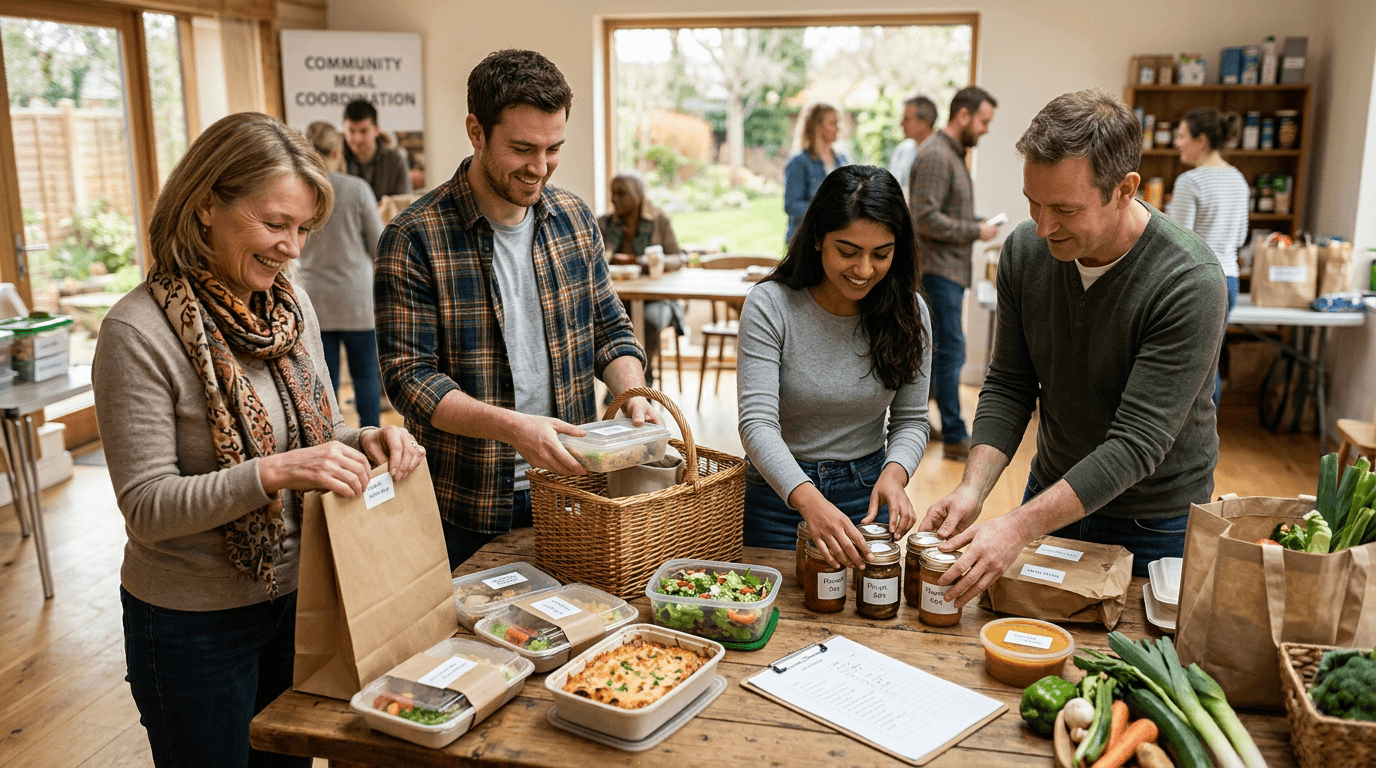
When a new family moves in nearby, a week of home-cooked dinners from the neighborhood is one of the most practical and genuinely warm things a community can do. The problem is that organizing it usually falls apart in a group chat, with three people signing up for Tuesday and nobody covering Thursday. This checklist gives you a clean process from start to finish.
Start with what you actually need to know
Before you ask a single neighbor to sign up, get answers to a short list of questions from whoever is organizing on behalf of the new family. You only need to do this once, and it saves a dozen awkward follow-up texts.

- How many people are you feeding? Adults, kids, ages of the kids if it matters for portion size or pickiness.
- Any allergies or dietary restrictions? Get specific: a nut allergy is different from a preference for vegetarian meals.
- What nights do you need covered? Pick a start date and an end date. Seven nights is generous; five is more realistic for most neighborhoods.
- What time works for drop-off? A one-hour window, like 5 to 6 p.m., is easier for volunteers to hit than a single time.
- Where exactly should meals be left? Front porch, side door, handed to someone directly? Be specific.
- Does the family want contact or prefer a quiet drop-off? Some families are overwhelmed and just want food. Others appreciate a quick hello.
- Should volunteers include containers they want back, or keep it disposable? Disposable is simpler and kinder.
Ask whether the family has a freezer meal preference. Some families in a move-in week actually prefer a frozen casserole they can heat when they're ready, rather than a timed delivery.
Build the sign-up before you share it
Once you have the family's details, set up the sign-up yourself before sending anything to neighbors. A bare-bones list with open slots leads to confusion. A ready-to-go sign-up with labeled nights and clear instructions gets filled in an afternoon.
Create one slot per night. Label each slot with the date and day of the week, like "Monday, June 9" rather than just "Monday," so there's no ambiguity. Include a short description field or notes section where the volunteer can list what they plan to bring, which also prevents three lasagnas and no salad.
For neighborhoods that want something simpler than a spreadsheet, Many Hands lets you build out each dinner night as a separate action item and share one link. Neighbors click the link, see what nights are open, and claim a slot without creating an account or downloading anything. That removes the friction that kills momentum in the first hour of sign-ups.
What to include in the sign-up
Each entry in the sign-up should give volunteers everything they need without having to ask you anything. Put this information somewhere they can reference it after they've claimed their slot.
- The family's name and address, with apartment number or unit if relevant.
- Drop-off window, for example, 5:00 to 6:30 p.m.
- Number of servings needed.
- Known allergies and restrictions, listed clearly.
- Whether the family prefers contact or quiet drop-off.
- A note about containers, disposable preferred, or not.
- Your name and phone number as the coordinator, in case something comes up day-of.
A sign-up that answers every question before someone has to ask it is the difference between a week of dinners that happens and one that almost happened.
How to share it so people actually sign up
Send the link once to your neighborhood group, HOA list, or church circle with a short personal note. Something like: "The Garcias just moved in on Elm and we're putting together a week of dinners. Five nights still open, takes two minutes to grab one." Then let it sit for 24 hours before a single follow-up reminder.
Avoid sending it to a group chat where people have to scroll up to find the link later. A direct email or a posted link in a neighborhood app with the sign-up URL visible works better. If you're using Many Hands, the link is the whole sign-up, so anyone who has it can see which nights are still open in real time.
If you're coordinating a smaller group, say six households on a single street, a plain list in an email reply thread can work fine. The link-based approach matters more when you're coordinating fifteen or more people across different channels.
Day-of checklist for volunteers
Send this as a short reminder to each person a day before their night. You can copy and paste it or drop it into the confirmation message your sign-up tool sends.
- Check the serving count and make a little extra, one or two extra portions costs almost nothing.
- Pack everything in disposable containers if possible.
- Label the dish with any common allergens it contains, even if you think it's allergen-free.
- Arrive within the drop-off window. If you're running late, text the coordinator, not the family.
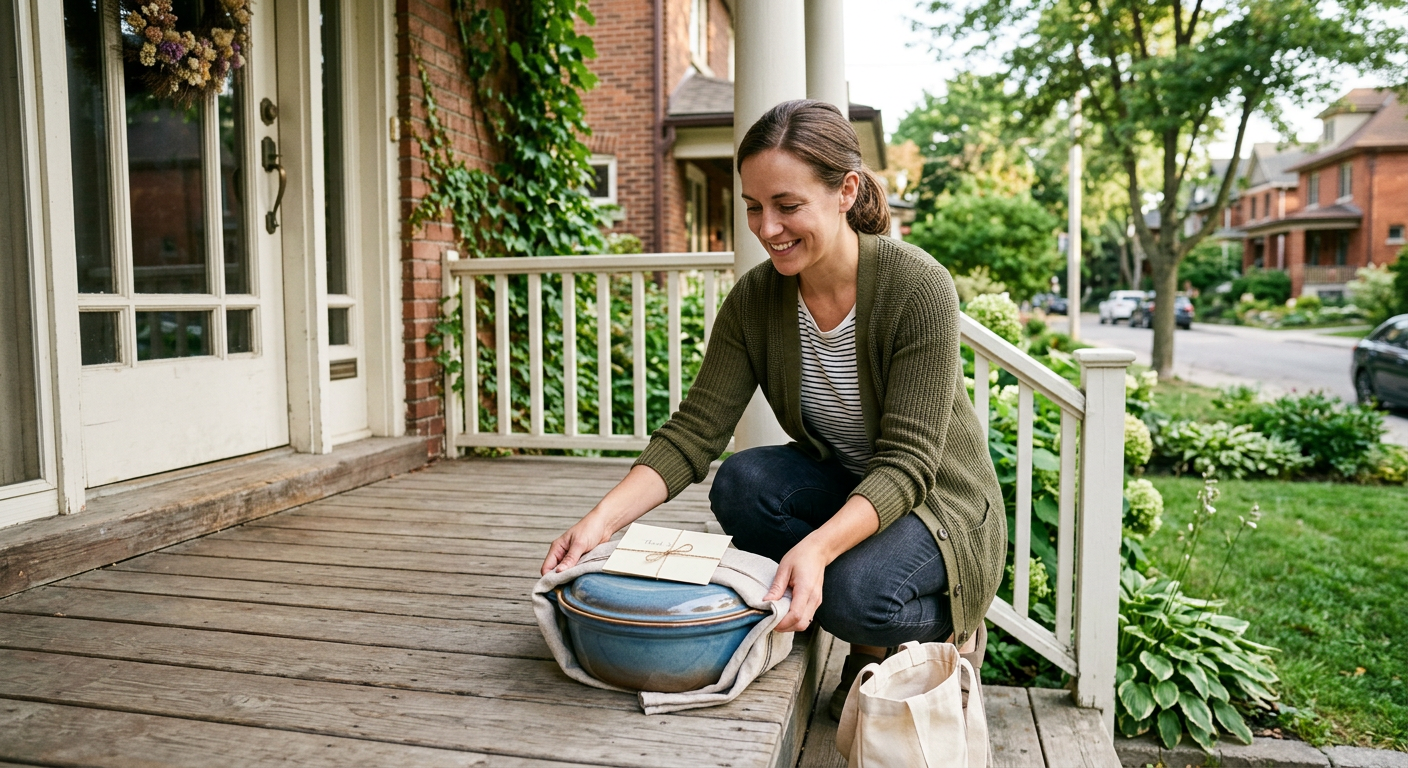
- Leave a small note with your name on it if you'd like. It makes the meal feel personal without requiring a conversation.
- Don't linger unless the family invites you in. They're still probably surrounded by boxes.
Coordinator tasks for the week
Once sign-ups are filled, your job shifts from recruitment to coverage. Here's what to stay on top of.
- Confirm each slot is filled before the week starts. Chase any gaps early, not the day of.
- Send each volunteer a reminder the day before with the address, drop-off time, and any dietary notes.
- Check in briefly the day after each delivery. A quick "how'd it go?" lets you catch any hiccups before they repeat.
- Let the new family know who's coming each day, so they're not opening the door to a stranger.
- If a volunteer cancels day-of, reach out to the next easiest person on the list, usually someone who already did a night and might be willing to help again, or someone who offered but couldn't take a slot.
A few things worth skipping
A meal coordination effort can get complicated fast if the organizer tries to do too much. Skip the themed nights unless the group specifically asks for it. Skip the elaborate sign-up with dietary preference dropdowns and delivery time choices; simplicity is what gets sign-ups filled. And skip the pressure to make it a long production. A week of five dinners, well-organized, is genuinely meaningful. Two weeks of chaos helps nobody.
The goal is a new family that feels noticed and fed while they're still figuring out which box has the forks. A clean list, one link, and neighbors who know exactly what to do is all it takes to pull that off.