How to coordinate a neighborhood block party without a group chat blowing up your phone

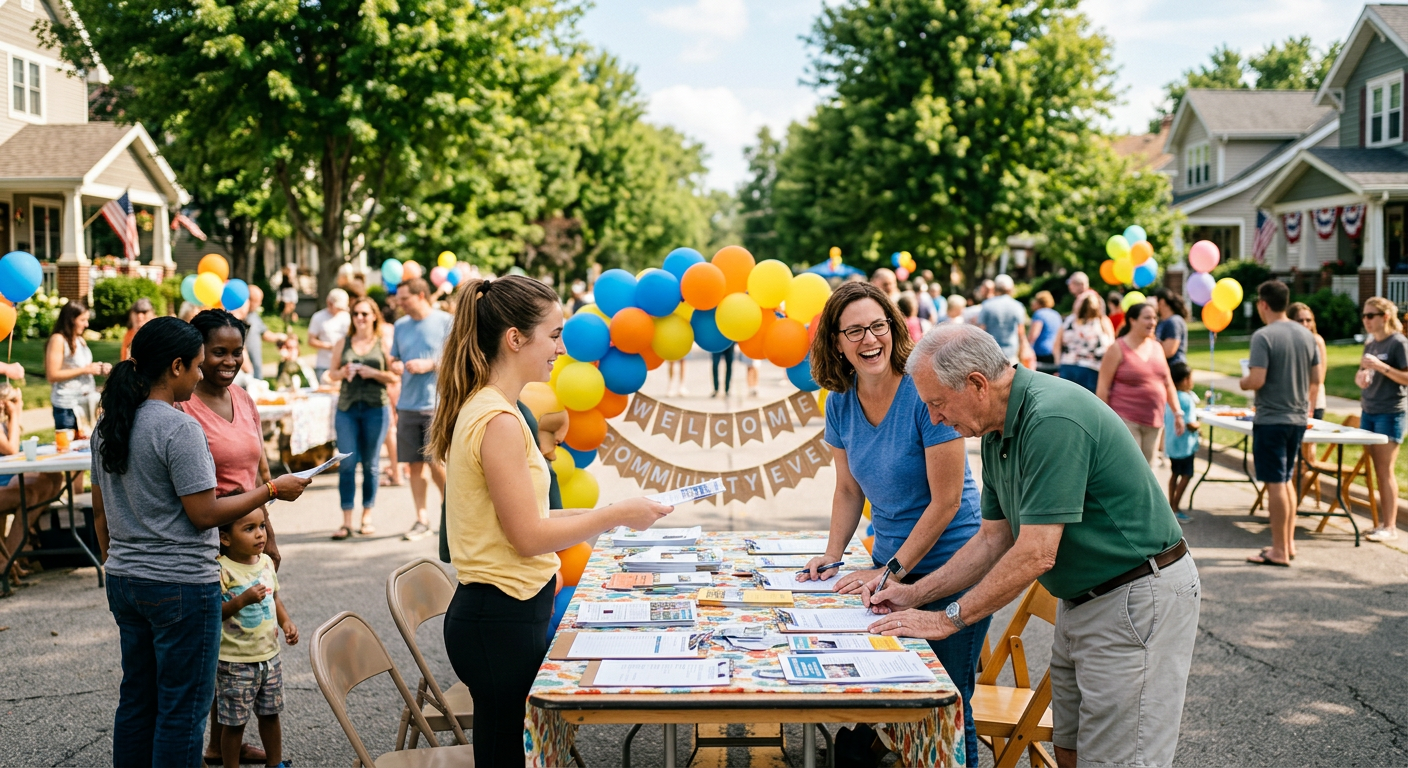
Block parties are fun to attend and miserable to plan, mostly because the planning happens in a group chat where forty people are talking at once and nobody knows who actually signed up to bring ice. Here is a simpler way to divide the work, get commitments, and stop checking your phone every five minutes.
Why group chats fail for event coordination
A group chat is great for casual conversation. It is terrible for tracking who agreed to do what. Messages get buried, people forget they said yes, and the organizer ends up re-asking the same question three times. By the time the party rolls around, you have three people bringing chips and nobody bringing a table.
The core problem is that a chat thread mixes discussion with decisions. When someone says "I can bring lemonade!" in a thread full of emoji reactions, that commitment disappears in minutes. You need a place where tasks live separately from conversation.
Start with a task list, not a call for volunteers
Before you post anything in the group chat, write down every job that needs a person. Be specific. "Food" is not a task. "Two cases of water" is. "Setup" is not a task. "Arrive at 10 a.m. to move the Hendersons' folding tables to the street" is.
A typical block party needs someone covering each of these areas:
- Food and drinks. Assign items by quantity, not just category. Ice, cups, plates, napkins, and condiments are separate line items.
- Equipment. Tables, chairs, a canopy or two, an extension cord, a speaker.
- Setup crew. People who arrive 90 minutes early. Name the time and what they will do.
- Kid activities. Whoever is running the water balloons or the chalk station needs to know that in advance, not the morning of.
- Cleanup crew. This one always goes unfilled if you do not ask for it by name.
- Permit or street closure contact. One person who handles the city paperwork and knows the rules.
Write your task list in a notes app or a simple document first. Get the full picture of what needs doing before you share anything. Gaps are much easier to spot before volunteers start claiming things.
Assign one point person per area, not a committee
Committees make decisions slowly. One person per area makes decisions fast. For a neighborhood block party, you do not need a formal structure, just a short list of neighbors who each own one piece of the event. The food person handles all food questions. The equipment person figures out who has a canopy. You stop being the bottleneck for every detail.
One person per area makes decisions fast. You stop being the bottleneck for every detail.
This also makes your outreach much more targeted. Instead of posting "Who can help with stuff?" in the group chat, you send three direct messages to three specific neighbors asking if they will own one area. Personal asks get answered. Broadcast asks get ignored.
Use one link to collect commitments
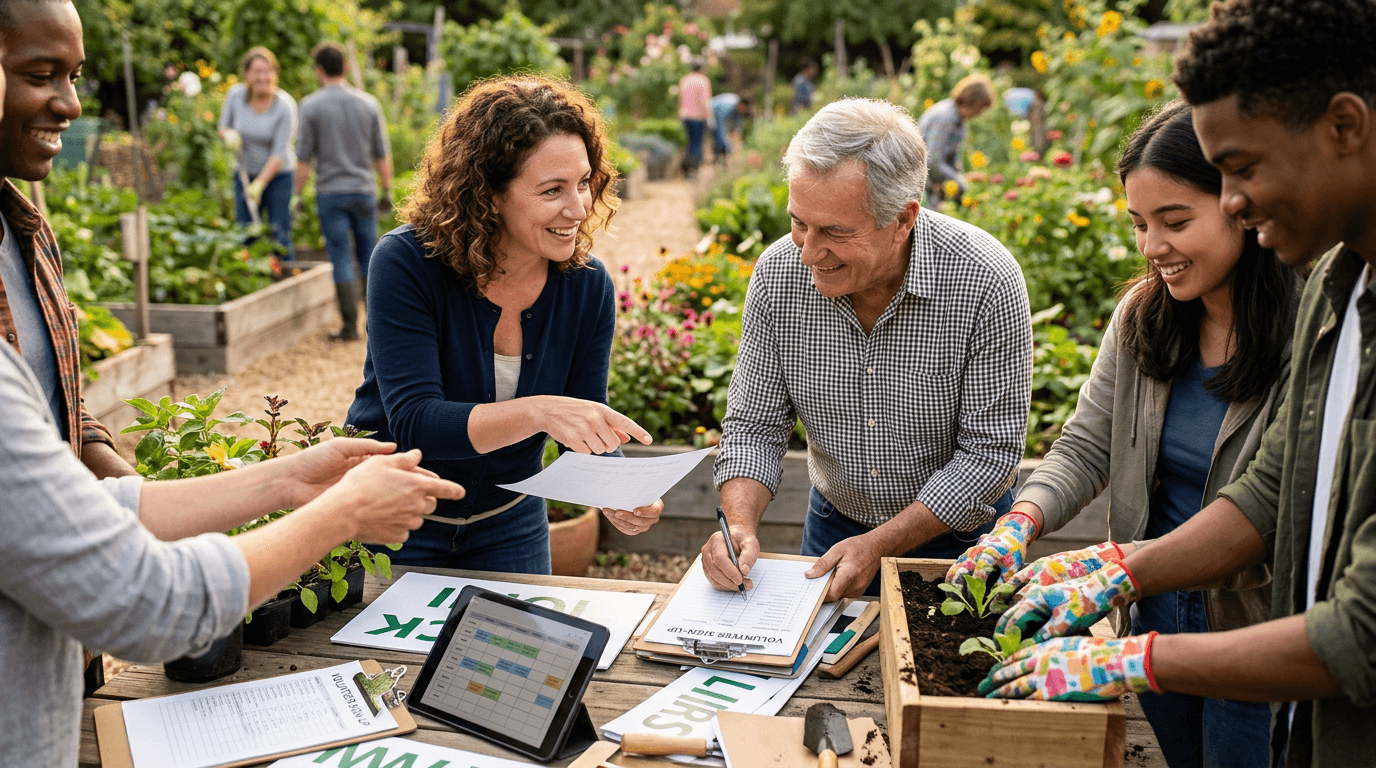
Once your task list is ready, you need a way for neighbors to claim items without a back-and-forth thread. This is where a simple sign-up tool beats a group chat entirely. You put all the tasks in one place, share a single link, and people pick what they can do without anyone having to tally responses manually.
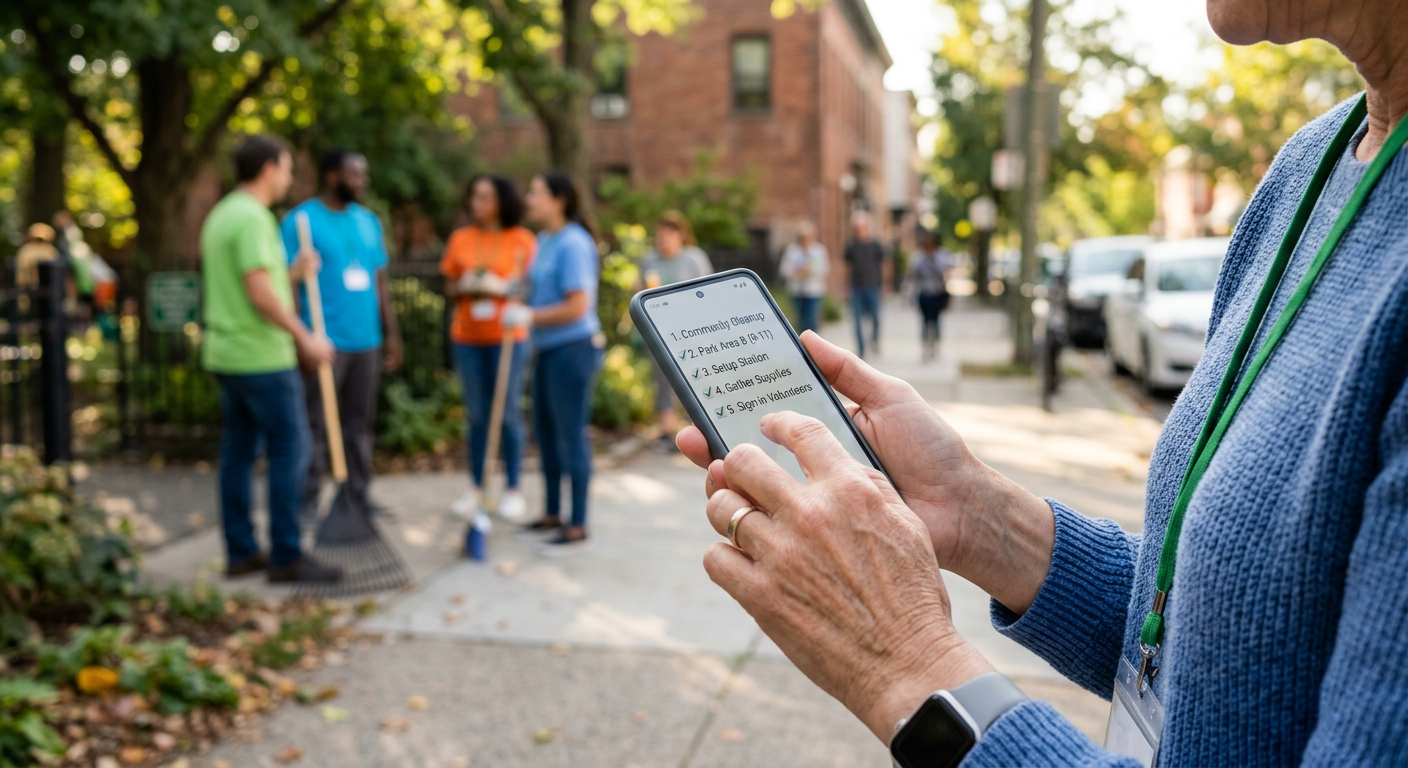
Many Hands works well here because volunteers do not need to create an account or download anything. You build the task, break it into items ("Bring 2 bags of ice," "Arrive at 10 a.m. for setup," "Bring a folding table"), and send one link to the group. Neighbors tap the link, claim what they want, and you see a live list of who has what. The free plan covers one active task, which is exactly what a single block party needs.
If your block party is very small, say ten households or fewer, a shared Google Doc or even a paper sheet passed door to door works fine. You do not need a dedicated tool for a tiny event. The link approach pays off most when you have 20 or more households and multiple categories of tasks.
How to share the sign-up without starting a new thread war
- Post once in the group chat with the date, the basic plan, and the link. Keep it to three sentences.
- Pin the message if your chat app allows it.
- Send one follow-up to the group about a week before, reminding people the link is still open.
- Message only the specific people who have not claimed anything yet. Do not mass-remind the whole group.
- After the deadline, post the final task list so everyone can see who is doing what. This is the one update the whole group actually needs.
That is five touch points total, four of which are either quiet or targeted. The group chat stays calm because you are not using it as a coordination tool, just as a broadcast channel for a few key announcements.
The day-before check
Send a short message to every volunteer the day before the party. Not to the group, to individuals. Something like: "Hey, just confirming you have the two bags of ice for tomorrow, thanks so much." This catches problems before they happen and takes five minutes with a tool that shows you each person's commitment.
Have a short backup plan for the items most likely to fall through: ice, cups, and the setup crew. These are the highest-impact gaps on the day. Know which neighbor you would call if any of those fell apart.
After the party
Send one thank-you to the group chat that names the people who did the heavy lifting. Public acknowledgment costs nothing and makes it much easier to recruit the same neighbors next year. Keep your task list somewhere you can find it in twelve months. A block party that runs once tends to become an annual thing, and starting from a working template is a lot easier than rebuilding from scratch.
The goal is a party people remember for the right reasons, not a planning process they survived. Lock down the tasks before you open the floor, use a single place for commitments, and keep the group chat for actual conversation.