The ultimate neighborhood cleanup checklist: how to organize 20+ volunteers in under an hour
Getting 20 or more neighbors to show up, know their job, and actually finish the work is harder than the cleanup itself. The logistics eat your time before anyone picks up a single bag. This checklist cuts that setup down so you spend your hour on the park, not on the planning.
Start with the job, not the people
The instinct is to post "who can help Saturday?" and figure out the rest later. That works fine for five people. With 20 or more it creates overlap, gaps, and volunteers standing around waiting to be told what to do. Map the work first.
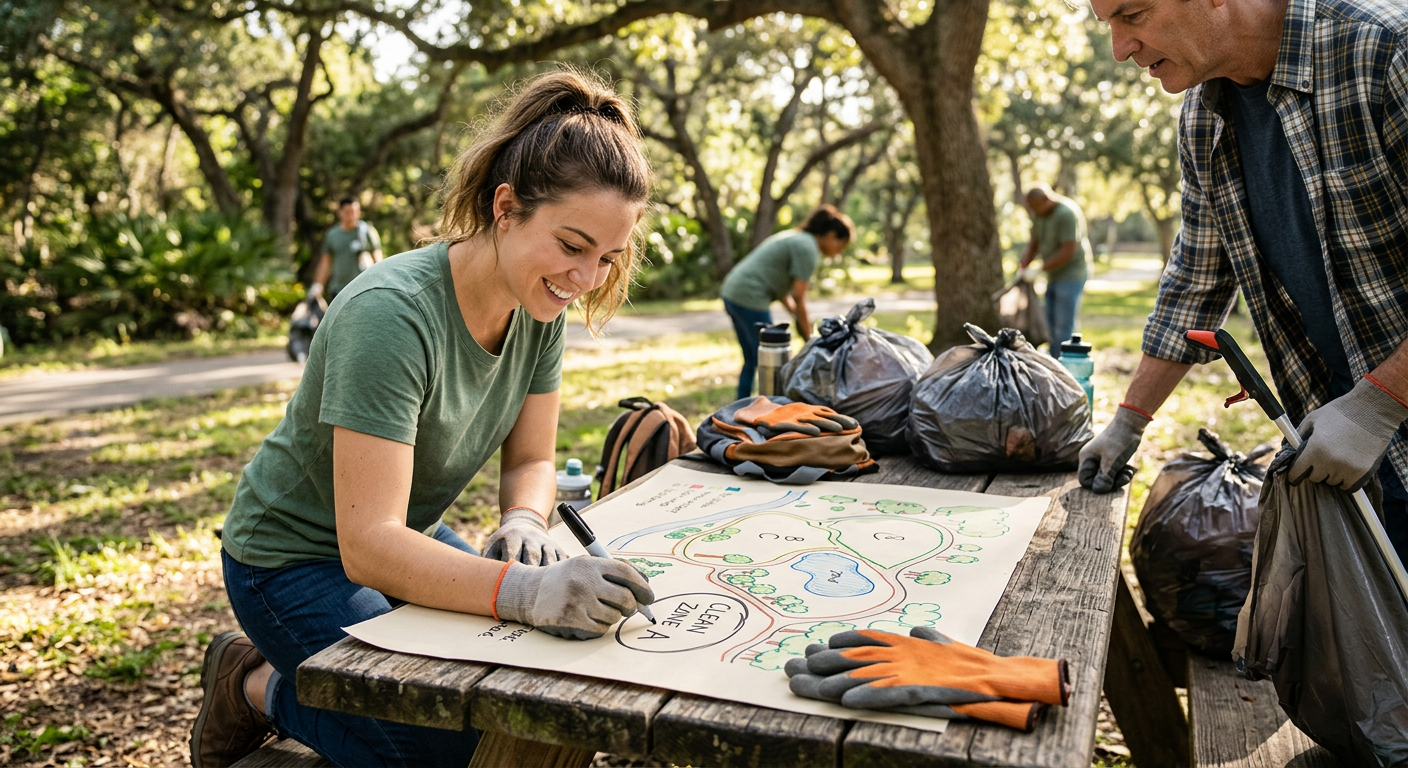
Walk the cleanup area and write down every distinct task: litter pickup on the east trail, graffiti scrubbing on the pavilion wall, mulching the garden beds, bagging brush along the fence line, directing foot traffic at the entrance. Each item should be specific enough that a stranger can read it and get started without asking you a question.
Aim for tasks that take 45 to 90 minutes each. Anything shorter feels like busywork; anything longer discourages volunteers who want to feel finished.
The pre-event checklist (two to three days out)
Running this list before the day-of prevents the most common snags: no gloves, no bags, no one at the gate.
- Task list finalized. Every zone has a name and a description. Aim for one task per two to three volunteers for jobs that need a team, or one-to-one for solo jobs like photographing before and after.
- Supply lead assigned. One person owns the gear list: trash bags, work gloves, grabbers, buckets, sunscreen, a first aid kit. They confirm quantities two days out.
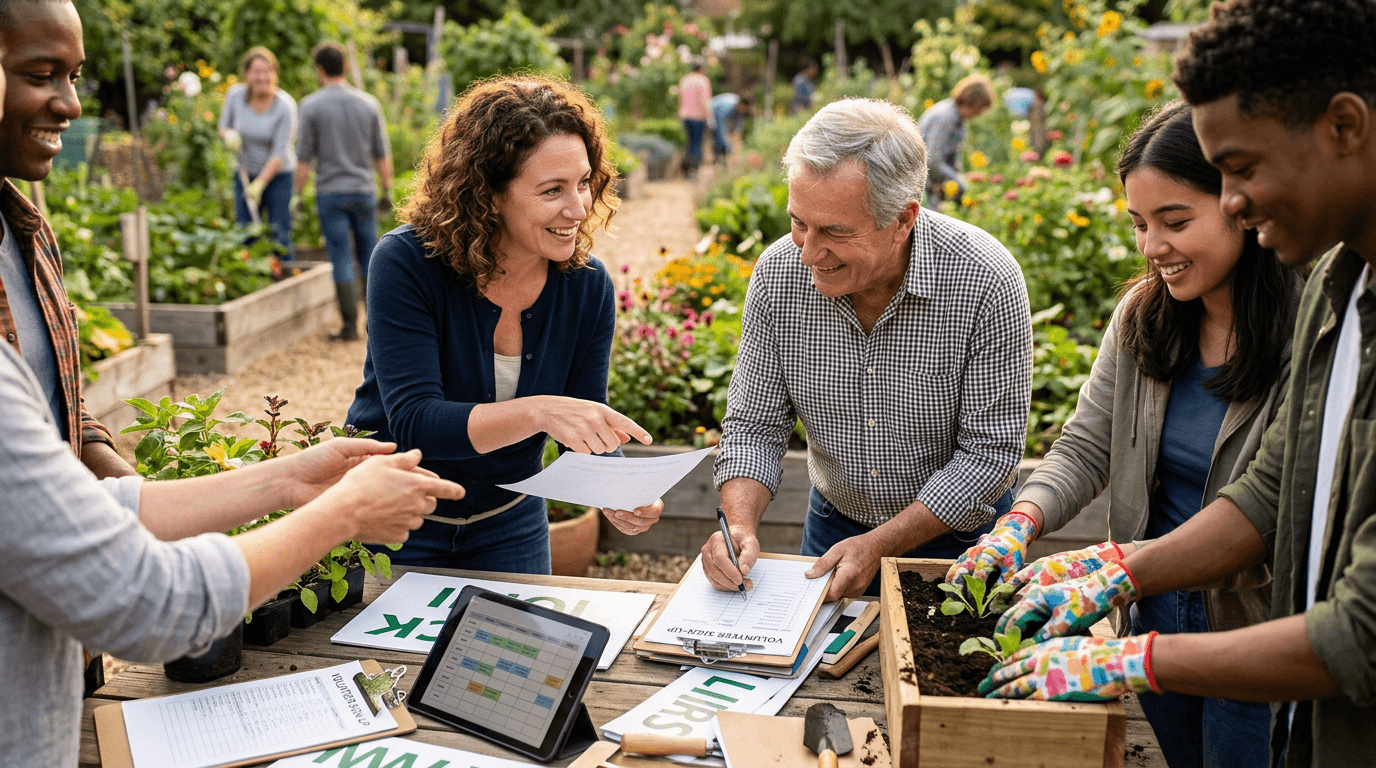
- Sign-up shared. Volunteers need to know what they are signing up for, not just "cleanup." A tool like Many Hands lets you list every task as a separate item and share one link. Volunteers claim a spot with no account or app download, which cuts the back-and-forth texts considerably.
- Point people named. For groups larger than 15, designate one zone lead per major area. They handle questions so you are not pulled in six directions at once.
- Parking and meeting point confirmed. Send a single message with the exact address, parking note, and a start time. Include what to wear (closed-toe shoes, clothes you can get dirty).
The day-of checklist (first 30 minutes)
Your goal in the first 30 minutes is zero confusion. Every volunteer should know their task, have their supplies, and be working before you finish your coffee.
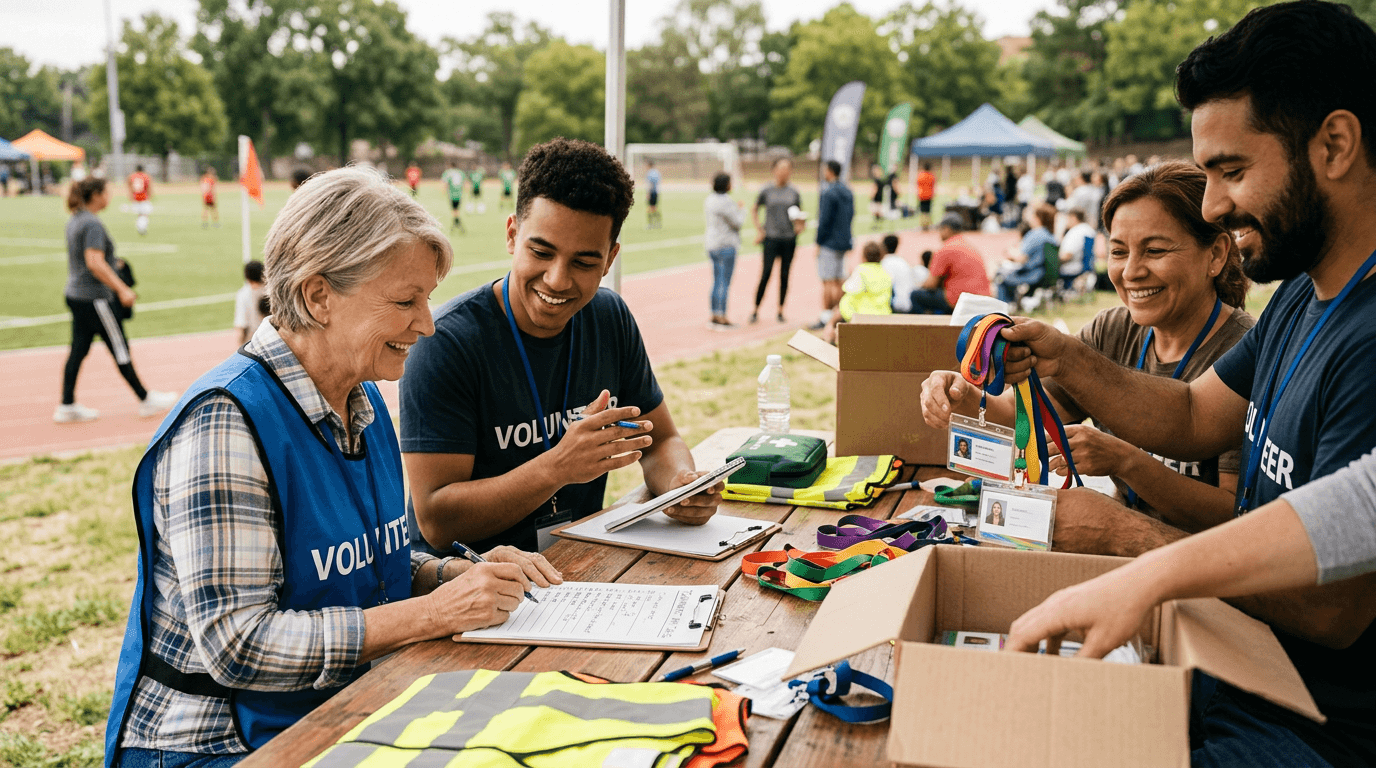
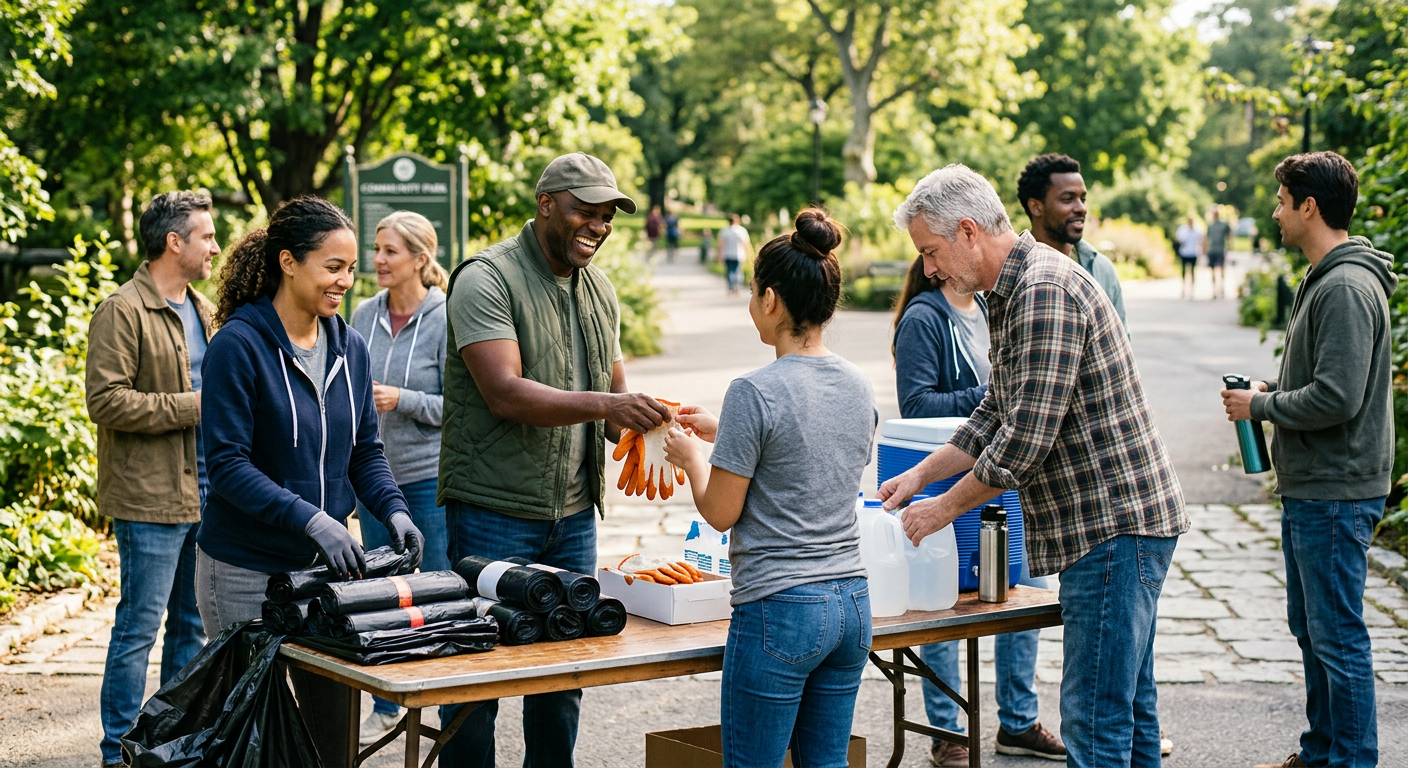
- Arrive 20 minutes early and set up a supply table at the main entrance.
- Print or pull up your task list so you can check people in as they arrive.
- Give each volunteer or team a brief verbal handoff: zone name, what done looks like, where to put full bags.
- Do a quick radio check with zone leads (or just a group text thread if you are keeping it simple).
- Do a short all-hands kickoff, two minutes max, covering safety basics: no heavy lifting alone, watch for needles or broken glass, where the first aid kit is.
Every volunteer should know their task, have their supplies, and be working before you finish your coffee.
Task breakdown by volunteer count
Use this as a starting template. Adjust for your specific site.
| Task | Suggested volunteers | Supplies needed |
|---|---|---|
| Litter pickup (trails and paths) | 4 to 6 | Bags, grabbers, gloves |
| Brush clearing and bagging | 4 to 6 | Pruning shears, bags, gloves |
| Graffiti removal | 2 to 3 | Cleaning solution, scrub brushes, gloves |
| Garden bed weeding and mulching | 3 to 4 | Mulch, trowels, gloves |
| Supply and water station | 1 to 2 | Water jugs, snacks, first aid kit |
| Photography and social media | 1 | Phone or camera |
| Bag collection and disposal | 2 to 3 | Vehicle with cargo space, ties |
Keeping 20 people on track mid-event
Once everyone is working, your job shifts to troubleshooting. Check in with zone leads every 20 minutes. The two most common mid-event problems are a zone finishing early with nowhere to go, and a zone falling behind and needing more hands.
Build one floating task into your plan, something useful but not critical, like repainting faded trail markers or planting bulbs. Volunteers who finish early get something real to do instead of leaving or standing around.
Do not let volunteers haul away bags in personal vehicles without first confirming your municipality's bulk waste pickup schedule. Some areas have specific drop sites or pickup windows for cleanup events.
The 15-minute wrap-up
A clean close keeps morale high and makes your next event easier.
- Walk each zone with the lead and confirm it is actually finished, not just abandoned.
- Collect leftover supplies and note what ran short (gloves are almost always first).
- Take a group photo before people scatter. It is good for the neighborhood association newsletter and good for recruiting next time.
- Say thank you out loud, to the group and to individual zone leads by name.
After the event: the 10-minute debrief
Send one follow-up message within 24 hours. Include what got done (bags collected, area covered, hours contributed), a photo if you have one, and a note on when the next cleanup is. Volunteers who feel the impact are far more likely to return.
Keep a simple notes file with what worked, what ran short, and which zones needed more people. A neighborhood cleanup is often a recurring event, and that file cuts your planning time in half next year.
If you run cleanups more than once or have multiple task types to coordinate, a tool that lets volunteers self-select tasks from a shared list saves a significant amount of back-and-forth. The free plan on Many Hands covers a single active task, which is enough for most one-day events.