Sports team volunteer jobs checklist: who does what on tournament day
Tournament day has a way of revealing every gap in your planning. The snack table is unstaffed, nobody knows who's running the scoreboard, and three parents show up to the same gate when another is completely unmanned. A clear volunteer jobs list, shared before the day, fixes most of that.
Why tournament volunteer coordination breaks down
Most sports team coordinators send a message asking for help, get a flood of "I can help!" replies, and then spend two days sorting out who's doing what. By the time the list is sorted, half the parents have forgotten what they signed up for. The problem isn't a lack of willing volunteers, it's that vague asks produce vague commitments.
The fix is to define every job before you ask anyone to fill it. That means thinking through the full day in time blocks and listing every role that needs a body, even the ones that feel obvious.
For a one-day tournament, a free tool like Many Hands works well here. You build the task, break it into specific action items (one per job), and share a single link. Parents claim a job with no account required. No spreadsheet, no reply-all thread.
The master checklist: every volunteer job by time block
Use this as a starting point and cut whatever doesn't apply to your event. Add specific start times when you share it.
Morning setup (1 to 2 hours before first game)
- Equipment lead. Hauls and sets up team gear, nets, cones, or benches. Knows where everything lives and where it goes back.
- Snack table setup. Arrives early, sets up the table, labels items for allergies, and keeps it tidy throughout the morning.
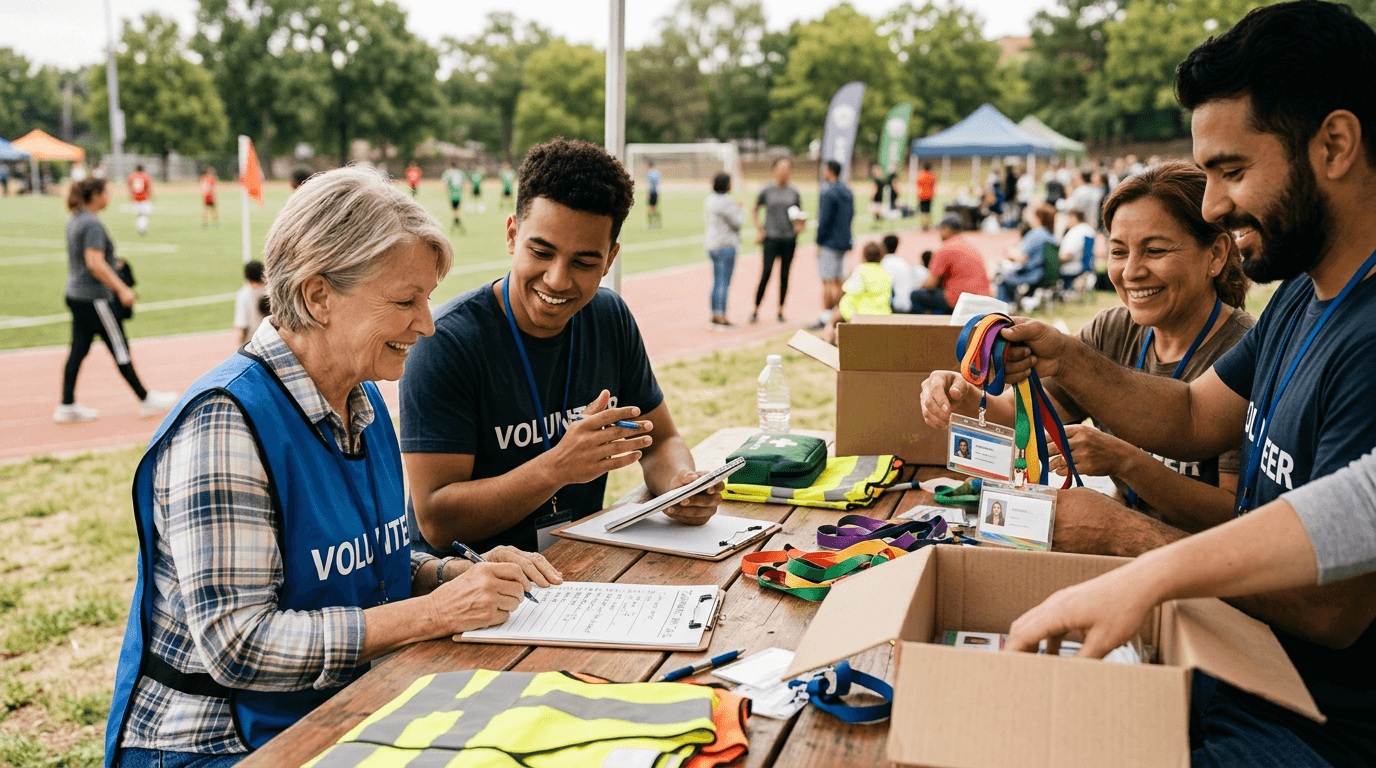
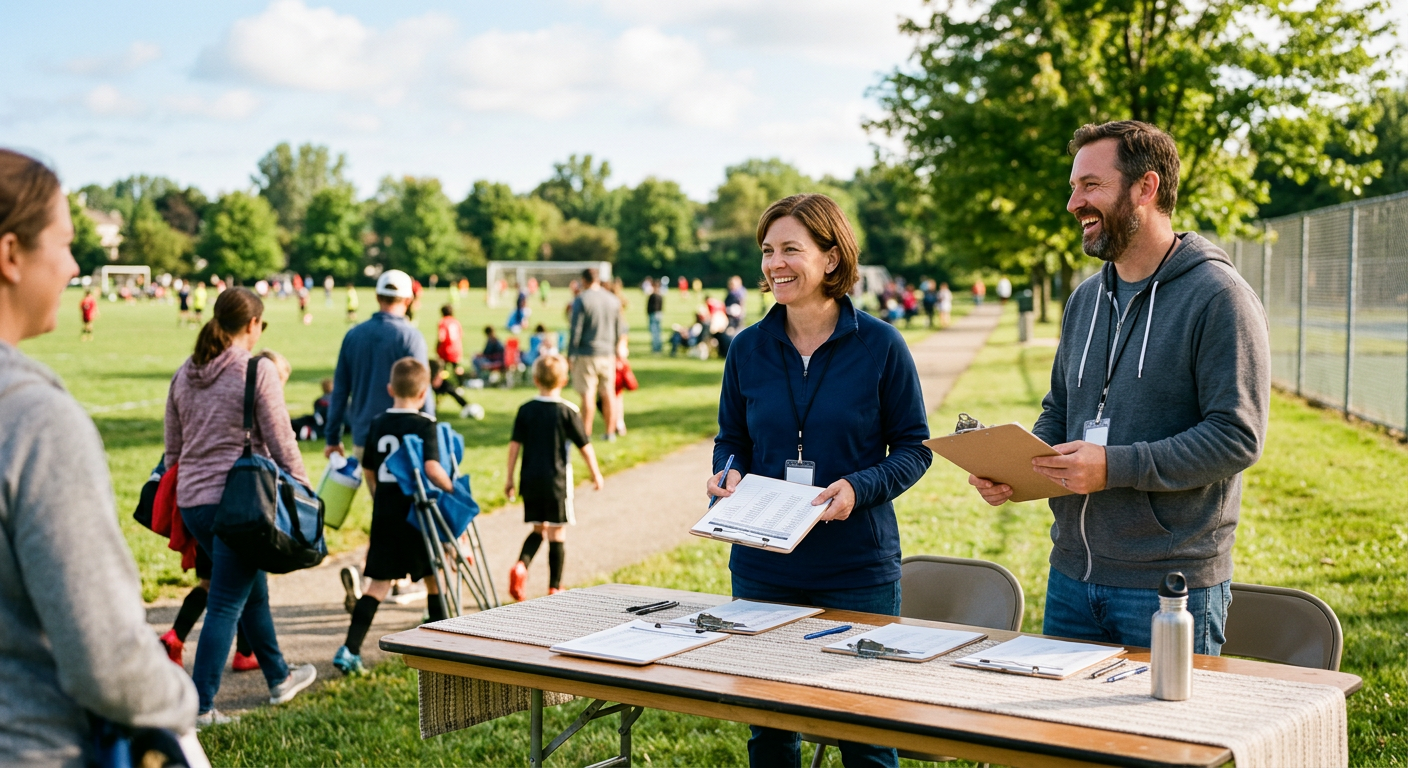
- Check-in table. Greets arriving families, hands out schedules or wristbands, answers basic questions about the venue.
- Parking and arrival. Stands at the entrance, directs cars, and helps families with strollers or coolers get to the right field.
- Banner and signage. Hangs team banners, puts up directional signs if the venue is large, and takes them down at the end.
During games
- Sideline coordinator. Keeps the team area organized, manages substitutions with the coach, and keeps non-players from wandering onto the field.
- Scoreboard or score tracking. Runs the scoreboard or keeps a manual tally if the venue doesn't have one. Reports scores to the tournament desk if required.
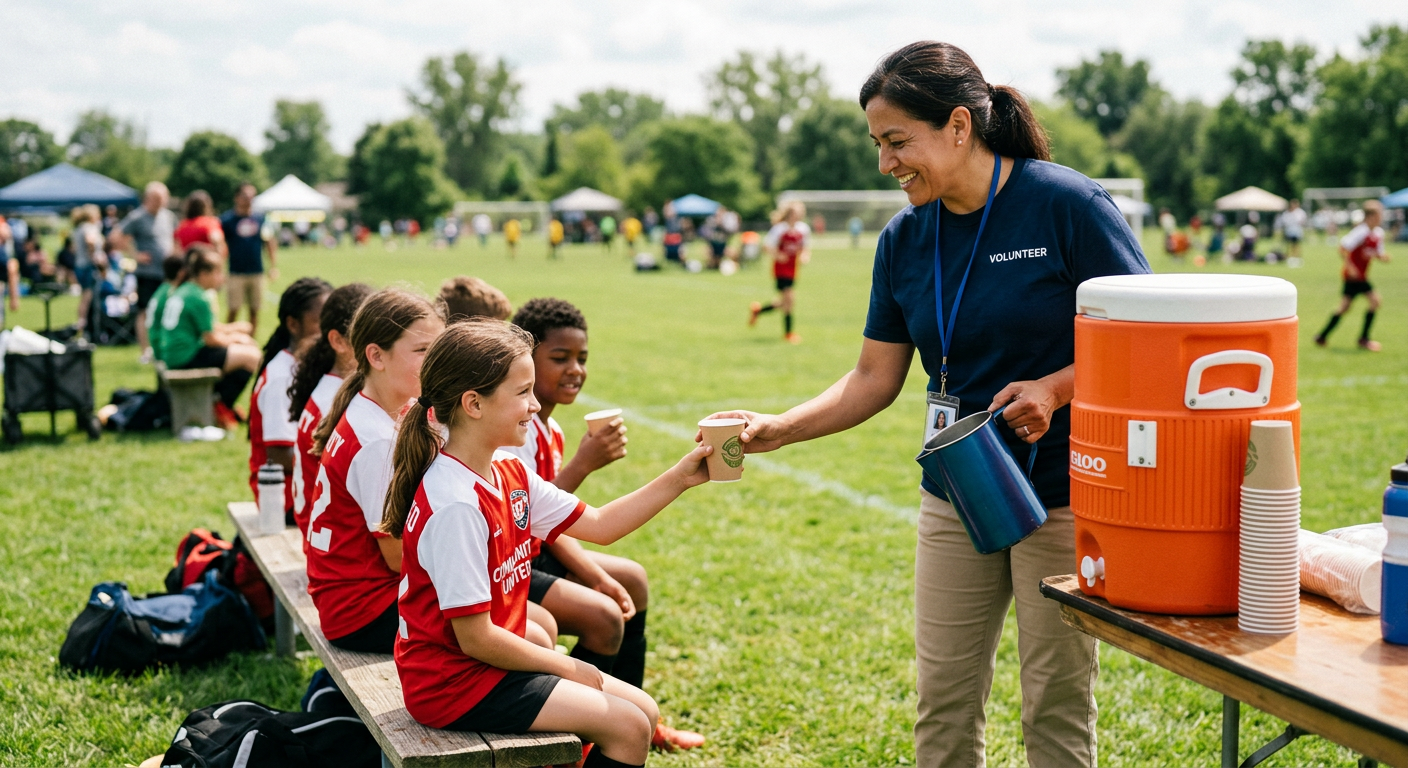
- Snack and water station. Refills water, restocks snacks between games, and collects trash around the table.
- Photographer. Captures game action and team moments. Shares photos to the team group after the event.
- Younger sibling wrangler. Keeps younger kids entertained near the sideline so parents can actually watch the game.
- First aid contact. Knows where the first aid kit is and who the venue's medical staff are. Not a substitute for a medical professional, just the person who acts fast if something happens.
The problem isn't a lack of willing volunteers, it's that vague asks produce vague commitments.
Between games
- Lunch or snack coordination. If the team is eating together, this person organizes the order, collects money, and makes sure everyone gets fed before the next game.
- Field reset. Picks up litter, straightens the team area, refills water jugs, and does a quick sweep of the sideline.
- Schedule watcher. Tracks the tournament bracket, knows when the next game is, and gives the coach a heads-up on timing.
End of day
- Teardown crew. Packs up team gear, folds tables, collects any borrowed equipment, and does a final trash sweep.
- Lost and found. Collects items left behind and posts a photo to the team group so owners can claim them.
- Thank-you message. Sends a note to all volunteers that evening. One person, one message, done.
How to assign jobs without the usual chaos
Once you have the list, the assignment process matters as much as the list itself. Here's a sequence that actually works.
- Finalize the job list two weeks before the tournament, not the week of.
- Share it in one place, a link that shows every open job and lets parents claim one. Avoid sending it via group text where replies get buried.
- Set a claim deadline five days before the tournament so you have time to fill gaps.
- Send one reminder two days out to anyone who hasn't claimed a job.
- The day before, send each volunteer a short message confirming their job, their arrival time, and one contact name if they have questions.
Don't assume a job is covered because someone said "I'll help." A job is only covered when a specific person has a specific role with a specific start time.
Jobs that are often missed
Most teams remember snacks and equipment but forget a few jobs that cause problems on the day.
| Often missed | Why it matters |
|---|---|
| Parking direction | Venue lots fill fast and confused families are late to games |
| Score reporting | Tournament brackets stall if scores aren't submitted on time |
| Sibling supervision | Parents can't watch the game if they're chasing a toddler |
| First aid contact | Someone needs to know where the kit is before an injury happens |
| End-of-day teardown | Coaches shouldn't be the last ones on the field picking up cones |
Keeping the day-of handoff smooth
Even with every job assigned, tournament morning is noisy. Print a one-page job sheet with each volunteer's name, role, and arrival time. Give it to the one person running point, usually the team manager or a designated volunteer lead. That person is the answer to every "what do I do?" question, which frees the coach to coach.
Reuse this list every season
The real payoff of building a detailed checklist is that you only build it once. Save it, duplicate it for the next tournament, and update arrival times. If you use a tool like Many Hands to share the job list, you can copy the task for your next event without starting from scratch, and parents who helped last time already know how it works.
A well-run tournament day doesn't happen because everyone figured it out on the fly. It happens because someone did this work in advance. That someone is usually one parent with a good list and a way to share it.