
Church volunteer sign-up sheets vs. digital tools: what actually works for Sunday morning coordination

Sunday morning coordination is its own kind of puzzle. You need greeters at the door, someone running the sound board, nursery volunteers, parking lot helpers, and a coffee crew, all showing up at the right time without anyone doubling up or dropping out. Whether a paper sign-up sheet or a digital tool is better depends less on the size of your church and more on how your volunteers actually communicate.
What paper sign-up sheets do well
Paper is not as outdated as people assume. A clipboard at the welcome desk, a sheet posted on the bulletin board, or a printed grid in the church bulletin still works for congregations where attendance is consistent and volunteers are regulars who know what they're signing up for.
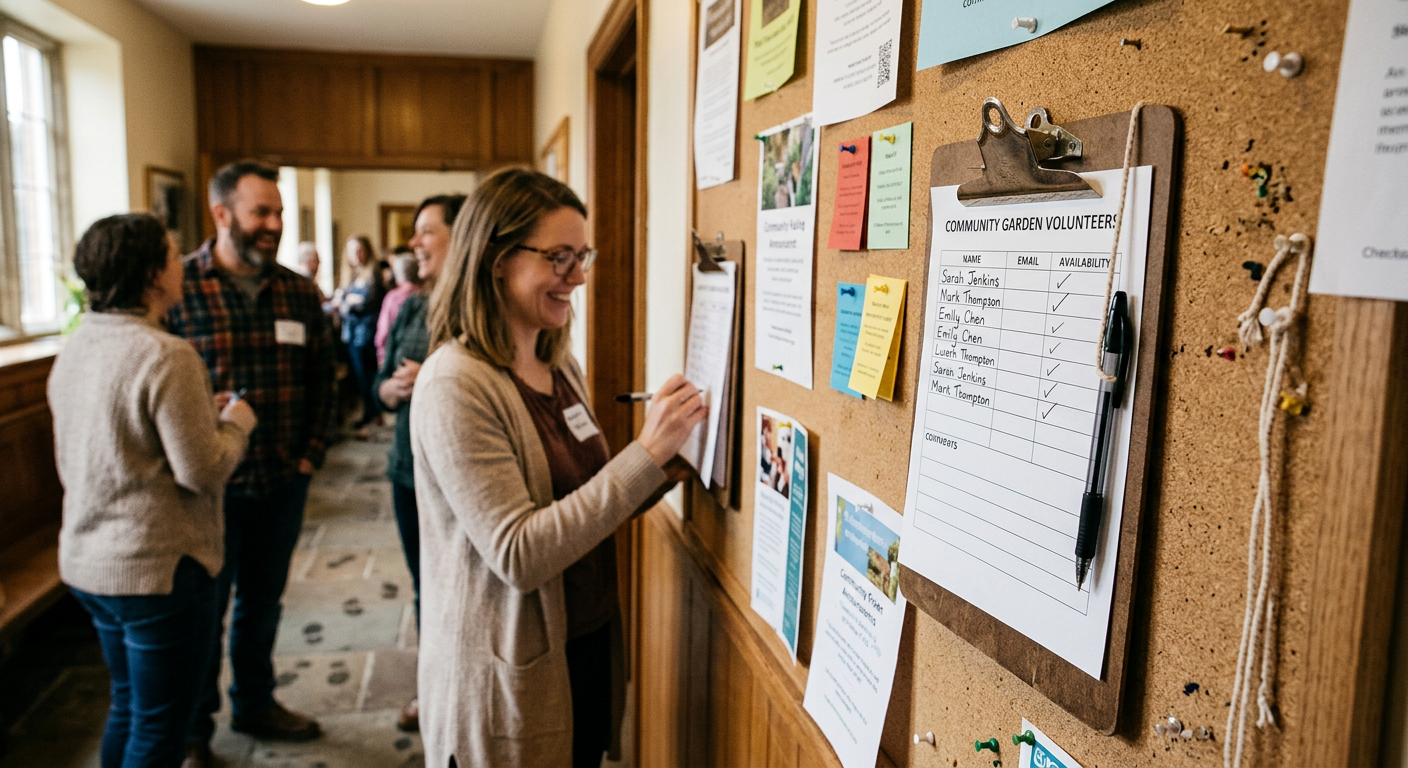
The advantages are real. No one needs an account. There's nothing to download. Older volunteers who aren't comfortable with apps or email links can fill in their name without friction. And a physical sheet gives the volunteer coordinator something tangible to hand to the pastor or team lead on Sunday morning.
The problems show up when something changes. Someone crosses their name off, and you don't see it until Saturday night. Two people sign up for the same slot because someone wrote illegibly. You end up with four nursery volunteers and no one at the sound board. Then you're making phone calls at 7 a.m. on Sunday.
Where digital tools actually earn their place
The single biggest advantage of a digital sign-up tool is not the sign-up itself, it's what happens after. Automated reminders, real-time visibility into open slots, and the ability to share one link instead of managing a clipboard are the things that reduce coordinator stress.
The biggest cost of paper coordination isn't the sheet itself. It's the hour a coordinator spends on Sunday morning filling gaps that could have been caught on Thursday.
Digital tools also help with roles that rotate. If you have 30 people sharing 8 greeter slots across a month, a paper sheet turns into a scheduling project. A shared link where volunteers can see what's open and claim a slot takes that work off the coordinator's plate.
If your Sunday roles stay mostly the same week to week, set up your digital sign-up once with recurring slots. You only update it when something changes, and volunteers get reminders without you sending a single text.
A practical comparison
| Situation | Paper sheet | Digital tool |
|---|---|---|
| Same 10 volunteers, same roles every week | Works fine | Overkill for the setup time |
| 30+ people rotating through 6 roles | Gets messy fast | Cleaner, easier to track |
| Last-minute substitutions needed | Requires phone calls | Resend the link, gap fills itself |
| Volunteers without smartphones | No barrier | May need a workaround |
| Coordinator wants to delegate visibility | Someone has to hold the clipboard | Anyone with the link can see status |
| One-time special Sunday or event | Simple and fast | Quick setup, shareable link |
The hybrid approach most churches land on
In practice, most churches don't go fully digital or fully paper. They use a digital tool to manage the actual sign-up process and then print a clean copy for the Sunday morning binder. That way, the coordinator isn't staring at a phone during service, and the team lead at each station has a physical reference.

This approach works especially well when you have a mix of volunteer generations. Younger volunteers claim their slot online. Someone on the coordination team handles sign-ups for members who prefer to sign a paper sheet, then enters those names into the digital version. The source of truth stays in one place.
If you're managing nursery volunteers specifically, confirm your congregation's child safety policy before sharing any list that includes children's room assignments publicly, even within a church link.
How to set up Sunday morning coordination with a digital tool
- List every role that needs to be filled for a typical Sunday, including setup and teardown, not just in-service positions.
- Group roles by time slot so volunteers know exactly when they need to be there.
- Assign a maximum number of volunteers per slot so you don't get four people for one job.
- Share one link through your church's existing communication channel, whether that's email, a group text, or a church app.
- Set a reminder to go out 48 hours before Sunday so volunteers have time to find a sub if something comes up.
- Print the final list Saturday evening as a backup for the day-of binder.
Tools like Many Hands are worth a look for this kind of setup. You create the task, break it into action items by role and time slot, and share one link. Volunteers claim their slot with no account required, which removes the friction that often kills digital adoption in volunteer-heavy church contexts. The free plan covers one active task, which is enough for a small team or a single special Sunday.
What to do when volunteers stop showing up
No-shows are a coordination problem before they're a commitment problem. If someone signs up and doesn't appear, the first question is whether they got a reminder. The second is whether the sign-up was easy enough that they were confident they'd signed up correctly.
Paper sheets get lost, smudged, or misread. Digital tools create a confirmation the volunteer can refer back to. Neither solves a volunteer who genuinely forgot, but a reminder sent 24 to 48 hours before Sunday catches most of those cases before they become a Sunday morning scramble.
If no-shows are a recurring pattern with specific roles, that's usually a signal that the role description is unclear, the time commitment is longer than advertised, or the role needs a team lead who can follow up personally. The sign-up method isn't the fix for a culture or communication problem, but it can reduce the friction that compounds it.